
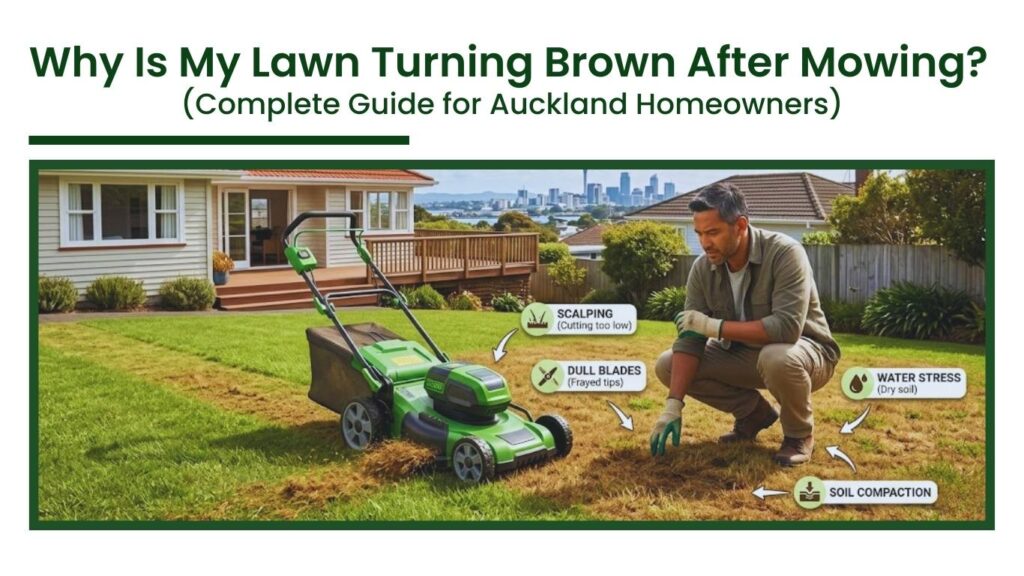
A freshly mowed lawn should look neat, vibrant, and green. But sometimes homeowners notice something surprising — their lawn suddenly looks brown right after mowing. If this has happened to your lawn in Auckland, don’t worry. In most cases, the grass isn’t dead; it’s simply reacting to stress or improper mowing practices.
Understanding why your lawn turns brown after mowing can help you fix the problem quickly and keep your grass healthy all year.
Why Does Grass Turn Brown After Mowing?
Grass blades are living plant tissue. When they’re cut incorrectly or under stressful conditions, the plant can lose moisture, struggle to photosynthesize, or become vulnerable to disease. Common causes include mowing too short, dull mower blades, poor watering, pests, and nutrient deficiencies.
Let’s explore the most common reasons this happens.
1. Mowing the Lawn Too Short (Scalping)
One of the biggest reasons lawns turn brown after mowing is cutting the grass too short.
When grass is cut extremely low, it exposes the lower part of the blade, which is naturally lighter or brownish in color. It also removes too much leaf surface needed for photosynthesis. This stresses the plant and can lead to browning patches.
Best mowing height for Auckland lawns
Most common grass types like ryegrass, fescue, or kikuyu grow best when maintained around 3–5 cm in height. Cutting more than one-third of the blade at once can shock the plant and cause discoloration.
Pro tip: Follow the one-third rule — never remove more than one-third of the grass blade in a single mow.
2. Dull Lawn Mower Blades
If your mower blades are dull, they tear the grass instead of cutting it cleanly. This creates ragged edges that dry out quickly and turn brown.
Clean cuts heal faster, while torn grass loses moisture rapidly and becomes vulnerable to disease.
Solution
- Sharpen mower blades every 20–25 hours of mowing
- Inspect blades regularly for damage
- Replace worn blades when needed
3. Mowing During Hot or Dry Weather
Mowing during the hottest part of the day can stress grass even more. Freshly cut blades lose moisture quickly under strong sunlight, which can cause brown tips or patches.
Best time to mow your lawn
- Late afternoon
- Early evening
- When temperatures are cooler
This helps the lawn recover faster.
4. Lack of Water
Grass needs moisture to recover after mowing. If your lawn is already dry, cutting it can make the stress worse and cause browning.
Signs your lawn needs water include:
- Dry or brittle grass blades
- Footprints staying visible on the lawn
- Grass turning dull or brown
Deep watering once or twice per week is usually more effective than shallow daily watering.
5. Thick Clumps of Grass Clippings
Leaving large clumps of clippings on the lawn can block sunlight and airflow. This can smother the grass underneath and create brown spots.
How to prevent it
- Mow when the grass is dry
- Use a mulching mower
- Rake large clumps of clippings
6. Lawn Diseases or Fungal Problems
Sometimes browning after mowing is a sign of lawn disease, such as brown patch or dollar spot. These problems often appear when grass is stressed by heat, humidity, or poor airflow.
Look for:
- Irregular brown patches
- Yellow rings or spots
- Slimy or discoloured blades
Proper aeration and improved drainage can help prevent fungal growth.
7. Lawn Pests
Certain insects feed on grass roots and weaken the lawn. When you mow, the damaged grass becomes more noticeable and appears brown.
Common lawn pests include:
- Grass grubs
- Porina caterpillars
- Chinch bugs
If sections of turf pull up easily, pests may be the cause.
8. Nutrient Deficiency
Grass needs nutrients like nitrogen, potassium, and iron to maintain its green colour. If the soil lacks these nutrients, mowing may reveal yellow or brown patches.
Applying a balanced slow-release lawn fertiliser can help restore colour and promote strong growth.
9. Mowing Wet Grass
Cutting wet grass can lead to uneven mowing and bruised blades. Wet clippings also clump together, blocking sunlight and increasing the risk of disease.
For best results:
- Wait until grass is dry before mowing
- Avoid mowing immediately after rain
How to Fix a Brown Lawn After Mowing
If your lawn turned brown after mowing, try these simple recovery steps:
- Raise the mower height
- Water deeply once or twice a week
- Sharpen mower blades
- Fertilize the lawn if nutrients are low
- Aerate compacted soil
- Remove excess thatch and clippings
With proper care, most lawns recover within a few weeks.
Preventing Brown Grass After Mowing
For a consistently healthy lawn in Auckland, follow these expert tips:
- Mow regularly but never too short
- Keep mower blades sharp
- Water deeply during dry periods
- Fertilise seasonally
- Aerate the soil once or twice per year
- Avoid mowing in extreme heat
These practices will help maintain a lush, green lawn throughout the year.
Conclusion
A lawn turning brown after mowing is usually a sign of mowing stress, dull blades, or poor lawn care practices rather than permanent damage. By adjusting mowing height, watering properly, and maintaining your equipment, you can quickly restore your lawn’s healthy green appearance.
With consistent maintenance and the right lawn care techniques, your Auckland lawn can stay vibrant, thick, and beautiful in every season.
FAQs
1. Why does my lawn look brown right after mowing?
Your lawn may look brown after mowing if the grass is cut too short, the mower blades are dull, or the lawn is dry and stressed. These factors can expose the lower part of the grass blade or damage the tips.
2. Will brown grass recover after mowing?
Yes, in most cases the lawn will recover within a few weeks if you water it properly, mow at the correct height, and maintain sharp mower blades.
3. What is the best mowing height for lawns in Auckland?
Most Auckland lawns grow best when kept between 3–5 cm high. Cutting too short can stress the grass and lead to browning.
4. Should I water my lawn after mowing?
If the soil is dry, watering after mowing can help the grass recover faster. Deep watering once or twice a week is usually best.
5. When should I hire a professional lawn mowing service?
If your lawn frequently turns brown, grows unevenly, or becomes difficult to maintain, hiring professionals can help. Lawn Moving Auckland provides expert lawn mowing and maintenance services to keep your lawn healthy, green, and well-maintained year-round.